EQUINE ASSISTED Learning
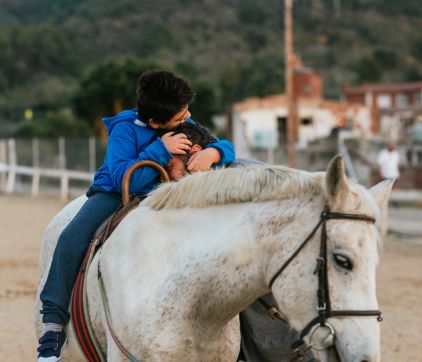
Equine Assisted Learning is a methodology that involves interaction with horses. The idea of combining equestrian activities with learning and treatment of physical and mental health issues dates back centuries. Ancient Greeks wrote about the benefits of horse riding, calling this practice Hippotherapy. Equine Assisted Learning involves activities such as riding, grooming, feeding, haltering, and leading a horse supervised by a horse professional. The goal of Equine Assisted Learning is to help the individual develop needed skills and attributes, such as accountability, responsibility, self-confidence, problem-solving skills, and self-control.
What Conditions / Disorders Does Equine Assisted Learning Help?
People with cognitive, psychomotor, and behavioral disabilities have shown positive results after equine therapy. Just like other therapies such as physical, occupational and speech-language therapy, people with disabilities are being helped or assisted by equine professionals to cope with their disability. Equine therapy has been successfully integrated into treatment programs for kids and adults who are being treated for Autism, Behavior Disorders, Mood Disorders, Learning Disorders, Social Interactive Disorders, ADHD, Depression, and related conditions.
WHY HORSES?
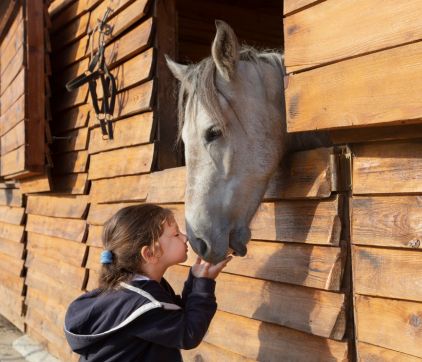
Horses are soothing, gentle animals. They are straightforward in their interactions without lying or manipulating. They do not judge or blame. Their presence alone can be immensely healing. Like people, horses are social beings whose herd dynamics are remarkably similar to the family system. Horses are typically non-judgmental, have no preconceived expectations or motives, and are highly effective at mirroring attitudes and behaviors of the humans with whom they are working. As a sophisticated herd animal, horses immediately begin building relationships with people as members of their herd. Horses move in three-dimensional gait which can help individuals with physical and muscular disorders improve and gain balance. Through working with horses, people recognize their conscious and unconscious patterns of interacting with others. Horses do not speak, but they are excellent communicators. Learning to understand horse behavior can help people learn how others function in the world and the way their behavior impacts others. Without any words at all, horses make clear when someone has crossed their boundaries. Trying to control or dominate will not work with a horse. Similarly, being extremely detached or passive can make it difficult to lead a horse and will deter the horse from complying with a request.
BENEFITS OF EQUINE ASSISTED LEARNING
- Improves Communication
- Assertiveness
- Interactive Skills
- Emotional Awareness
- Empathy
- Stress Tolerance
- Flexibility
- Problem Solving Skills
- Independence
- Social Responsibility
- Interpersonal Relationships
- Build Trust and Self Efficiency